Hair Loss Treatment in Jalandhar

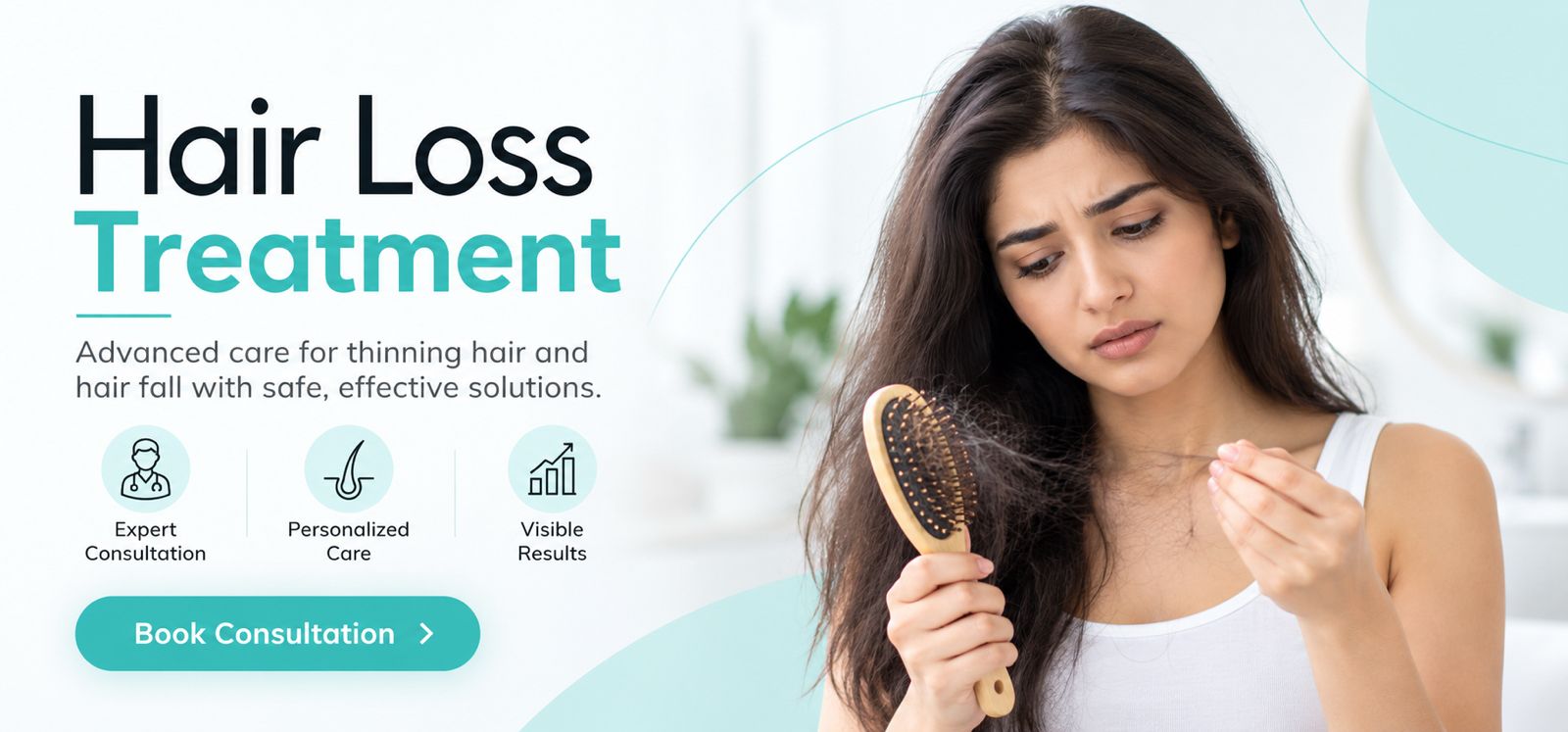
Looking for the best Hair Loss Treatment in Jalandhar? Dr. Shivani Skin Clinic provides customized hair care solutions for hair thinning, excess hair fall, and other hair-related issues. The clinic will focus on the root cause of hair loss and aim to provide appropriate treatments according to the hair and scalp conditions. If you are noticing that your hair is thinning out or shedding more, Dr. Shivani Skin Clinic will offer you expert advice and personalised treatment to help you achieve better-looking hair. At Dr. Shivani Skin Clinic, hair loss is not a cosmetic guessing game, but rather a medical condition that is treated. We don’t suggest anything until we have taken a look at your scalp, your hair pattern, your health history and your lifestyle. Others require extended medical care for the purpose of reducing shedding and assisting in the regrowth of the thinning areas. Therefore, choose Dr. Shivani Skin Clinic for Hair Fall treatment in Jalandhar.
Hair Loss Treatment Clinic in Jalandhar
Searching for a hair loss treatment clinic in Jalandhar? Then your search ends here at Dr. Shivani Skin Clinic. We offer the best hair loss treatment to address concerns like excessive hair loss, thinning hair, falling hairline, and low density. The clinic aims to identify the primary cause of your hair loss and the best treatments according to the state of your hairs and scalp. You can find a qualified skin specialist at Dr. Shivani Skin Clinic, Jalandhar, who can assess potential therapeutic options for you, which you think can be effective for improving your hair condition and treating the rapid or gradual decrease in the thickness of your hair or regular hair fall. Find out the professional recommendations and customized treatments for hair loss at Dr. Shivani Skin Clinic, Jalandhar.
Connect With Us
What Causes Hair Loss?
The causes of hair loss are as follows:
- Genetics: Hereditary hair loss.
- Hormonal changes: Pregnancy, menopause, or thyroid problems.
- Nutritional deficiencies: Lack of iron, protein, or vitamins.
- Stress: Physical or emotional stress.
- Medical conditions: Thyroid disorders and scalp infections.
- Medications: Certain medicines can cause hair loss.
- Poor hair care: Excessive heat, tight hairstyles, and harsh chemicals.
- Ageing: Hair naturally becomes thinner with age.
- Illness: High fever, surgery, or serious illness.
- Autoimmune disorders: Conditions like alopecia areata.
Types of Hair Loss and Their Treatments
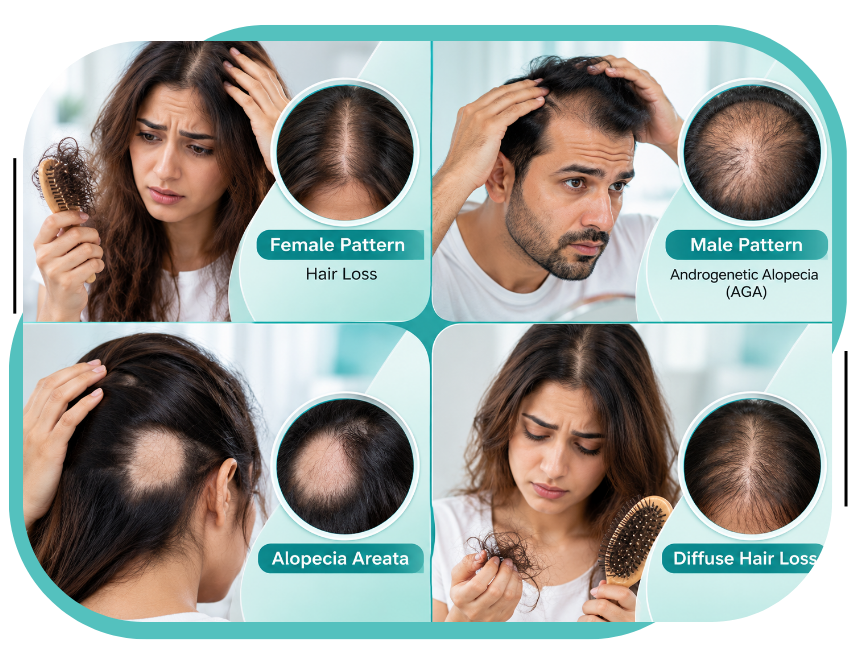
Hair loss is caused by various factors, including genetic factors, hormonal changes, stress, nutrient deficiencies, and scalp health. Dr. Shivani Skin Clinic will provide patients with an expert dermatological assessment to find the cause of the hair fall and they will be offered a range of treatment options depending on their specific hair and scalp issues.
Female Pattern Hair Loss Treatment
Female pattern hair loss results in progressive hair loss, primarily on the crown and central parting area. The typical signs are decreased hair density and an increased part line. Depending on the situation, correction of nutritional deficiencies and use of topical minoxidil and, if needed, prescribed medications will be used at Dr. Shivani Skin Clinic. Earlier diagnosis will help with the subsequent thinning of hair and promote healthy hair growth.
Male Pattern Hair Loss Treatment (Androgenetic Alopecia — AGA)
Male pattern hair loss is a genetic condition that often results in a balding crown and a receding hairline. The diagnosis can be made by a dermatologist by examining the scalp and patient history. Hair growth can be improved with topical minoxidil, in suitable patients, with prescription finasteride and in selected cases with hair transplantation. Early treatment may control the progression of the hair loss.
Alopecia Areata Treatment
Alopecia areata is an autoimmune disorder in which there are sudden, circular, or oval patches of hair loss on the scalp or elsewhere. The diagnosis is typically made during a physical exam. Treatment can be used to help control the condition and promote hair regrowth, and involves the use of other medications prescribed by a dermatologist, or corticosteroids depending on the severity.
Diffuse Hair Loss Treatment
Diffuse hair loss is the loss of hair in the general area of the scalp, instead of in patches. It can be caused by stress, illness, childbirth, hormonal fluctuations or nutritional deficiencies. Dr. Shivani Skin Clinic is a skin clinic where a dermatologist can examine the potential causes and suggest suitable investigations, if necessary. Treatment is based on the treatment of the underlying causes, correction of the confirmed deficiencies and hair recovery over time.
Why Choose Dr. Shivani Skin Clinic For Hair Loss Treatment In Jalandhar?
There are many reasons to choose Dr. Shivani Skin Clinic; it offers the following:
- Professional Hair Diagnosis: Expertise in recommending possible treatments for hair fall after professional diagnosis.
- Ongoing monitoring: There is a time lag between hair recovery and progress monitoring and the plan is revised as necessary.
- Professional And Personalized Advice: Paying individual attention and providing you with the necessary information for your case of hair loss.
- Convenient Jalandhar Clinic: Offering hair fall consultation in convenient location for patients living in Jalandhar seeking hair loss treatment.
- Professional Diagnosis And Early Intervention: Advising you to seek professional diagnosis and early intervention for hair loss.
EXCELLENT Based on 189 reviews
 Posted on Google

 Raj KumariVery good doctor in Jalandhar city must visitPosted on Google
 Poonam AroraBest doctor very nice behaviorPosted on Google
 hardeep kaurBest doctor in jalandhar i visit again ... Before I got acne treatment best results.. always recommendPosted on Google
 Nisha KhambraJust when I was so close to giving up on derma… dayum! I finally found the best. Amazing experience and actual results! So happy with the procedure. The best in Jalandhar City highly recommend! 👌🏼Posted on Google
 Rubi AroraI got done a pigmentation treatment I am quite satisfied with the service and treatment so far am so happy 😊Posted on Google
 Radhika KlairBest doctor in Jalandhar....I got my fulll medicines and got recovored......you have to visit if any problem..... That was the true review..Posted on Google
 Harman KlairBest doctor in jalandhar . I got carbon toning best result ... And best staff do this procedure ... Very happyPosted on Google
 Akashdeep Singhi have got done a tattoo removal treatment i am quite satisfied with the service and treatment so farPosted on Google
 Aditya singhStaff and the Doctor are really nice and cooperative. Very patient with the concerns and provided the best servicePosted on Google
 Ranjit kaur DhaliwalI got my laser hair reduction from dr shivani and results were really good and effective I recommend everyone dealing with any type of skin issue to consult dr shivani she is best dermatologist in jalandhar
